
Facilitator notes · Outdoor education, fictional · About 55 minutes
The Residential: a school trip safety simulation
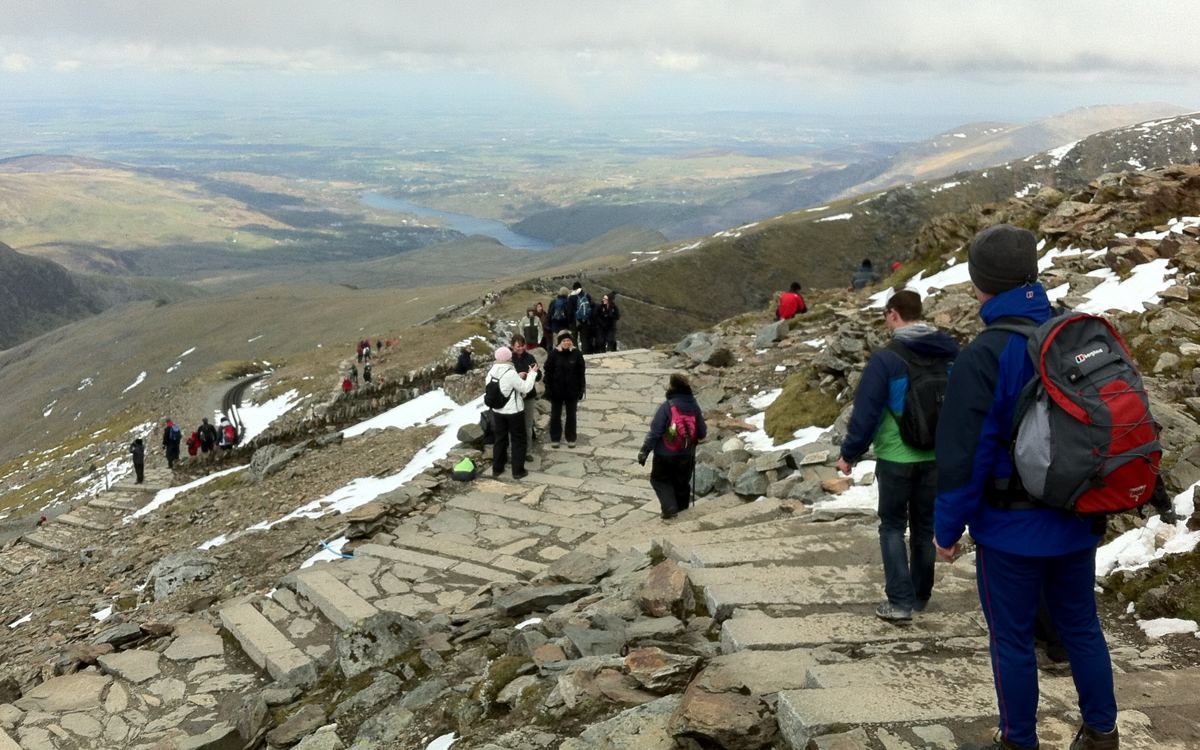
A school’s residential trip to an outdoor centre in the hills: thirty teenagers, three adults, a ridge walk and a forecast that changed. The trip is invented, built from patterns in real incidents, and nobody dies in any version of it. The group’s choices change the story, so two groups can reach different endings, and the same choices can end differently in harder or easier conditions.
Run The ResidentialAll scenarios
What the group does
Over this session we’ll sit in three seats in turn: the trip leader from the school, the instructor employed by the centre, and the other adults on the trip.
This trip is invented. Nobody dies in any version of it. Some endings include a pupil injured, lost for a while in cloud, or kept in hospital overnight.
- Day 1. Nothing goes wrong. We see how a residential normally runs: the slack, the habits and the things nobody writes down.
- Day 2. The ridge walk. Your choices change what happens, and some of what they change doesn’t show until later.
- The ending you reached, the world you were in, and what was there all along.
It needs a screen everyone can see and about 55 minutes. A facilitator is optional, and nobody needs to sign in or know the field.
What the debrief opens up
Its sections:
- The careful choice
- Who put the leader there
- Same choice, different night
Some of the questions it asks the group:
- Which decision are we judging: the one we made, or the one that worked?
- What would have had to be true for turning back to have been the safe choice?
- At decision 5 every option broke a rule or leaned on a person. Who wrote those rules, and were they written for that night?
- Where in our work does the careful choice subtly move the risk somewhere nobody is looking?
Same choices, different ending
The group plays in one of two modes, picked at the start or at random. The same choices can end differently in each, which is the point: outcomes are rarely ours to choose.
- Hard mode. Overnight rain reaches the hills: the stream is up and the cloud arrives at one.
- Easy mode. The front stalls: the stream stays a step-over and the cloud arrives at half past three.
Further reading
- The sharp end and the blunt end. Teaching is sharp-end work. Decisions made far from the classroom, or the hillside, show their consequences only where the work is done. The Sharp End & Blunt End of Education, Jade Garratt.
- Slack. We can’t respond well to changes, incidents or threats if we are already operating at capacity. The safety buffer on day 1 is slack; so is the hour a briefing costs. Queuing Theory, Slack and Utilisation, Tom Geraghty.
- Plan continuation bias. “Getting up is optional. Getting down is mandatory.” Why turning back is hardest when we are nearly there, and how exit criteria agreed in advance help. Plan Continuation Bias, Tom Geraghty.
- What a briefing is for. How a team performs under pressure is shaped by what it built beforehand. Teams that spend longer structuring and sharing information do better when it counts. Crisis-Ready Teams, Jade Garratt.
- Weak signals. The stream remark and the forecast: subtle signs that make sense in hindsight, and where they go when nobody writes them down. Amplifying Weak Signals, Tom Geraghty.
- Work as imagined, work as done. The trip as planned and the trip as run. When we imagine work, nobody forgets a step. Work as Imagined vs Work as Done, Tom Geraghty.
Key papers
- The first few minutes. Teams that have never worked together settle into a pattern within minutes, and that pattern predicts how well they perform. Zijlstra, Waller & Phillips (2012), Setting the Tone: Early Interaction Patterns in Swift-Starting Teams, on the Psych Safety field guide.
- Crisis-ready teams. Waller and Kaplan’s research on why a team’s performance in a crisis is largely decided before the crisis starts. Waller & Kaplan (2024), Crisis-Ready Teams, on the Psych Safety field guide.
- The order of information. In crisis teams, performance depended less on how much information people shared than on the order they shared it in. Uitdewilligen & Waller (2018), Information Sharing and Decision-Making in Multidisciplinary Crisis Management Teams, on the Psych Safety field guide.
- Threat rigidity. Under threat, people and groups narrow their attention and fall back on familiar responses, just when they most need to take in something new. Staw, Sandelands & Dutton (1981), Threat Rigidity Effects in Organizational Behavior, on the Psych Safety field guide.
Sources
- Hollnagel, E. (2009). The ETTO Principle: Efficiency-Thoroughness Trade-Off. Ashgate.
- Dekker, S. (2014). The Field Guide to Understanding ‘Human Error’ (3rd ed.). Ashgate.
- Conklin, T. (2012). Pre-Accident Investigations. CRC Press.
- Garratt, J. (2026). Learning Teams. psychsafety.com.