
Facilitator notes · Mountaineering, 1996 · About 45 minutes
The 1996 Everest disaster
On 10 and 11 May 1996, eight climbers died on Mount Everest, among them the leaders of two commercial expeditions, Rob Hall and Scott Fischer. In The Summit Window the group takes the seats of an expedition leader, a climbing Sherpa, a paying client and two guides, and decides when to keep climbing and when to turn back. It opens up turnaround rules, status and silence, plan continuation, and whose account becomes the record.
For the facilitator. In the session this event stays masked, as The Summit Window, until the reveal at the end, so the group meets it as the people involved did, with only what they knew at the time. Keep this page for yourself before the session.
Run The Summit WindowAll scenarios
What happened
Expedition A was Adventure Consultants, led by Rob Hall. Expedition B was Mountain Madness, led by Scott Fischer. The journalist was Jon Krakauer.
They were the two expedition leaders, Rob Hall and Scott Fischer; guide Andy Harris; clients Doug Hansen and Yasuko Namba; and three members of an Indian border police expedition on the north side of the mountain.
Beck Weathers, the client who had lost his sight, was left for dead on the col twice. The next day he walked into camp on his own, and was later evacuated in one of the highest helicopter rescues attempted up to then.
What the group does
Over this session we’ll sit in several seats in turn: an expedition leader, a climbing Sherpa, a paying client and two guides.
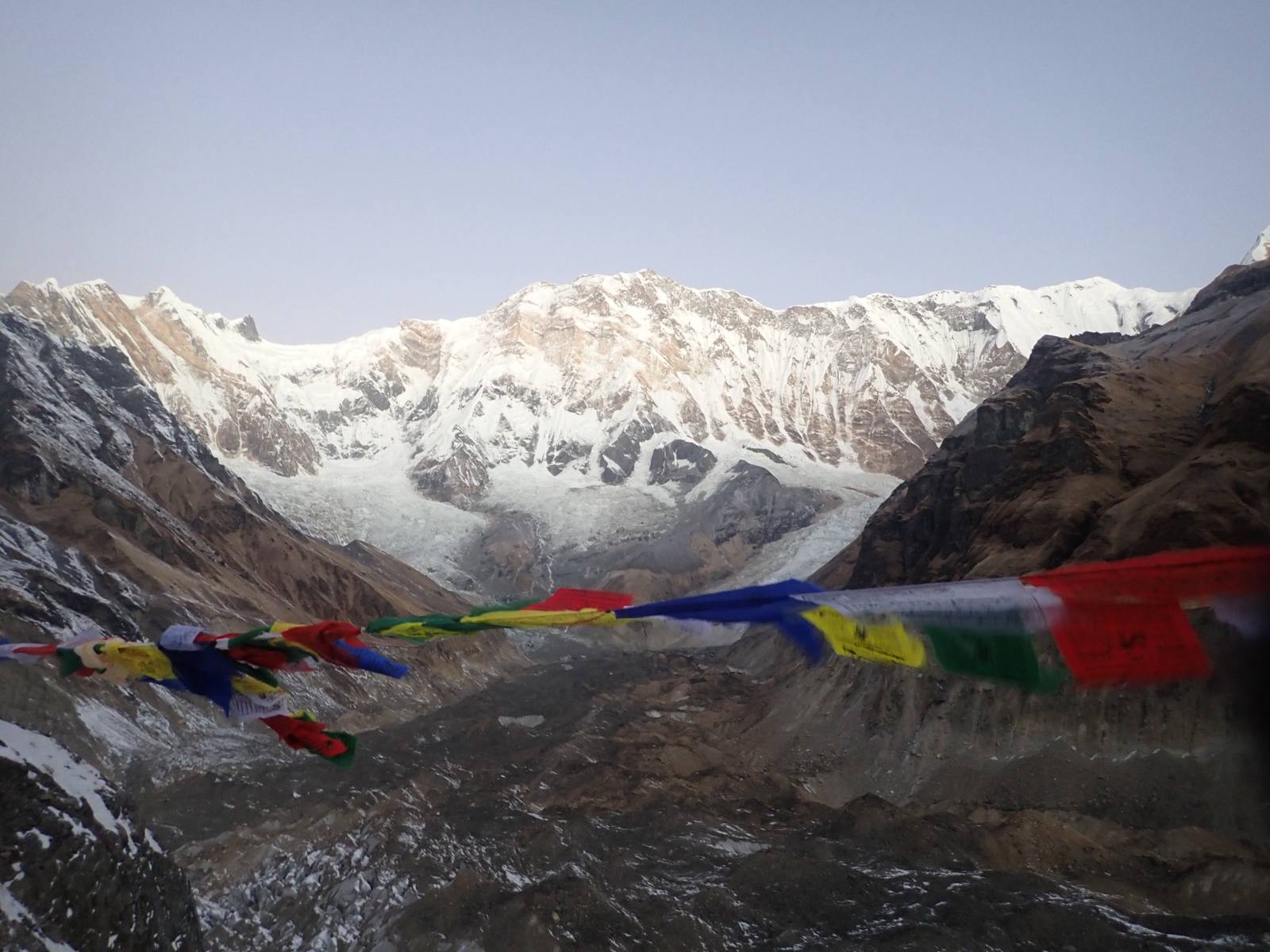
The photographs were taken in the Annapurna region of Nepal, not on the mountain in this story.
- An ordinary day. Nothing goes wrong. We see how a summit day normally runs.
- The incident day. The same mountain in a crowded season. Information arrives in the order it arrived for the people involved.
- The reveal and debrief. There was no official inquiry, so part of the debrief is about whose account we trust.
It needs a screen everyone can see and about 45 minutes. A facilitator is optional, and nobody needs to sign in or know the field.
What went right
The debrief looks at what people did well as well as what went wrong: most days, the same adaptations are why things go right.
- Three clients judged the delays for themselves and turned back. All three survived.
- When the sky briefly cleared, guides and clients in the lost group found the camp and raised the alarm for the others.
- Boukreev went out alone into the storm three times and brought back three climbers.
- Guide Andy Harris climbed back up alone with oxygen and water towards Hall and Hansen.
- Sherpas climbed up the next day to Fischer and the Taiwanese leader, Makalu Gau, and brought Gau down alive.
- Weathers walked into camp unaided after being left for dead, and a helicopter crew flew higher than almost anyone had attempted to evacuate him and Gau.
What the debrief opens up
Its sections:
- Rules, status and silence
- Whose account becomes the record?
Some of the questions it asks the group:
- On the ordinary day, what let a late summit end well? What did the incident day take away?
- Three clients turned back; most didn’t. What made turning back possible for them, and hard for the others?
- What would have made it cheaper for a lower-paid guide to say “I think we should turn round”?
- What happens to the information that reaches a leader whose word is “beyond appeal”?
Ways to debrief it
Each real incident can be debriefed three ways, chosen on its briefing screen: the standard debrief, a quick 20 to 30 minute debrief, or a learning team. To run a learning team on something from your own work, use the learning team guide.
Further reading
- Plan continuation bias. Summit fever by its other name. A turnaround time is an exit criterion agreed in advance; this is why it gets harder to keep as the summit gets closer. “Getting up is optional. Getting down is mandatory.” Plan Continuation Bias, Tom Geraghty.
- Production pressure. Clients who had paid tens of thousands of dollars, businesses that depended on summits, money already spent. Commercial pressure is production pressure on a mountain: it rarely gives an order, but it shapes what a late push looks like. The Amagasaki Disaster, Tom Geraghty.
- Rest, observation, planning, empowerment. Psychological safety in mountain teams, and the ROPE model, which asks why fatigue and accumulated stress are so often left out of safety thinking. Psychological Safety, Everest and Mountaineering, Tom Geraghty.
- Four kinds of power. Formal, informal, demographic and expert power, and why who gets listened to rarely matches anyone’s job title. Typologies of Power, Tom Geraghty.
- Whose account becomes the record. Accountability as the ability to give an account. When many partial accounts are flattened into one, most of what people saw is lost. Accountability, Tom Geraghty.
- Normalisation of deviance. How a line passed once without consequence becomes easier to pass the next time. The Challenger Disaster: Normalisation of Deviance, Tom Geraghty.
Key papers
- Lessons from Everest. Roberto’s analysis of the 1996 season: cognitive bias, psychological safety and the complexity of the system, working together. Roberto (2002), Lessons from Everest, on the Psych Safety field guide.
- Losses weigh more. Prospect theory: we weigh losses more heavily than equal gains, and take more risk to avoid a loss, such as weeks of effort and money already spent. Kahneman & Tversky (1979), Prospect Theory: An Analysis of Decision under Risk, on the Psych Safety field guide.
- Status and inclusive leadership. Lower-status team members feel less safe to speak up, and leaders who actively invite their views close much of that gap. Nembhard & Edmondson (2006), Making It Safe: Leader Inclusiveness and Professional Status, on the Psych Safety field guide.
- When a team’s structure gives way. Weick on a firefighting crew that lost its shared sense of what was happening, and what helps a team hold together: improvisation, roles people can rebuild, humility about what they know, and respectful interaction. Weick (1993), The Collapse of Sensemaking in Organizations: The Mann Gulch Disaster, on the Psych Safety field guide.
Sources
- Jon Krakauer, “Into Thin Air”, Outside magazine (September 1996), and the book Into Thin Air (1997). First-hand account by a client on Rob Hall’s team
- Anatoli Boukreev and G. Weston DeWalt, The Climb (1997). First-hand account by a guide on Scott Fischer’s team, written partly in reply to Krakauer
- Wikipedia, “1996 Mount Everest disaster” (secondary summary of the published accounts)
- Michael A. Roberto, “Lessons from Everest: The Interaction of Cognitive Bias, Psychological Safety, and System Complexity”, California Management Review 45(1), 2002
- Wikipedia, “Beck Weathers”