
Facilitator notes · Spaceflight, 2003 · About 45 minutes
The Space Shuttle Columbia disaster, 2003
On 1 February 2003, Space Shuttle Columbia broke apart during re-entry and its seven crew members died. Foam that struck the left wing at launch had broken a panel on its leading edge. During the mission, people tried three separate routes to get images of the wing. In The Foam Strike the group takes the seats of an engineer, a programme manager, an imagery analyst and the chair of the mission management team, over a week of meetings and emails while the crew carry on working in orbit.
For the facilitator. In the session this event stays masked, as The Foam Strike, until the reveal at the end, so the group meets it as the people involved did, with only what they knew at the time. Keep this page for yourself before the session.
Run The Foam StrikeAll scenarios
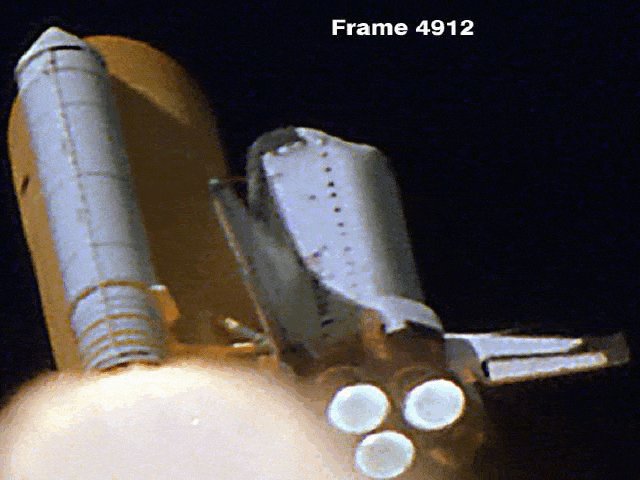
What happened
The mission was STS-107, launched on 16 January 2003.
On 1 February, minutes from landing, Columbia broke apart during re-entry over Texas. The foam had broken a reinforced carbon panel on the left wing’s leading edge, letting superheated gas into the wing.
They were Rick Husband, William McCool, Michael Anderson, Kalpana Chawla, David Brown, Laurel Clark and Ilan Ramon.
The investigation board later assessed what could have been done if the damage had been confirmed in time. It judged a rescue mission by another shuttle “challenging but feasible”, and an in-orbit repair high risk.
What the group does
Over this session we’ll sit in several seats: an engineer, a programme manager, an imagery analyst, and the chair of the team that runs the mission.
Unlike the other scenarios, most of this one happens slowly, over a week of meetings and emails, while the crew carry on working in orbit.
- An ordinary day. Two earlier flights. Nothing goes wrong. We see how a known problem gets handled.
- The incident day. A 16-day research mission. Information arrives in the order it arrived for the people involved.
- The reveal and debrief. Including what investigators found later about the options that existed.
It needs a screen everyone can see and about 45 minutes. A facilitator is optional, and nobody needs to sign in or know the field.
What went right
The debrief looks at what people did well as well as what went wrong: most days, the same adaptations are why things go right.
- The imagery analysts spotted the strike, judged it unusually large, and asked for images on Flight Day 1.
- Engineers and contractors formed a debris team quickly and worked through the weekend.
- People tried three separate routes to get images of the wing.
- The engineer co-chairing the debris team kept pushing, in writing, in person and in a heated hallway argument.
- The debris team told its manager clearly how uncertain its analysis was, and he took it to the management team.
- The investigation board looked beyond the foam to the organisation, and showed that “nothing could be done” had not been true.
What the debrief opens up
Its sections:
- “There’s not much we can do about it”
- Channels, rungs and the burden of proof
- Seventeen years after Challenger
Some of the questions it asks the group:
- On ordinary days, what does “within experience” let us stop worrying about? How would we notice the day it isn’t?
- In our organisation, who has to prove there is a problem, and who has to prove there isn’t?
- When do our proper channels filter out the very signals they exist to carry?
- What are the rungs above which people in our organisation don’t send their concerns?
Ways to debrief it
Each real incident can be debriefed three ways, chosen on its briefing screen: the standard debrief, a quick 20 to 30 minute debrief, or a learning team. To run a learning team on something from your own work, use the learning team guide.
Further reading
- Normalisation of deviance. Diane Vaughan’s term, from her study of Challenger: an unacceptable practice becomes acceptable when it is repeated without catastrophe, and each time it is easier to do again, because it was fine last time. The Challenger Disaster: Normalisation of Deviance, Tom Geraghty.
- Weak signals. Signals can be ignored, diluted as they travel up a hierarchy, or downplayed. A problem that stays with whoever finds it stays unknown. Amplifying Weak Signals, Tom Geraghty.
- Groupthink. Once a busy meeting had heard “no safety-of-flight issue”, reopening it meant disagreeing with the room. The agreement made the conclusion look firmer than the analysis behind it. A group needs ways to make dissent the expected thing as well as the brave one. Psychological Safety: Drive, Dissent and Checklists, Tom Geraghty.
- Production pressure. The question that came back from the management team was about turnaround, from a chair who was also running the next launch. Pressure to keep a programme on schedule rarely sounds like pressure; it sounds like the next item on the agenda. The Vasa, Tom Geraghty.
- The observer effect. People watch how a concern is received, and decide from that what is safe to raise next time. The psychological safety observer effect, Tom Geraghty.
- Normal accidents and drift. Perrow on complex, tightly coupled systems, Dekker on drift into failure, and moving authority to where the information is. Normal Accidents, Tom Geraghty.
- How complex systems fail. Richard Cook’s eighteen points, including that complex systems run in degraded mode, and that hindsight biases how we judge people afterwards. Dr Richard Cook: How Complex Systems Fail, Tom Geraghty.
Key papers
- Normalisation of deviance. Vaughan’s study of the Challenger launch decision, where the term comes from. The Columbia board later found that many of the same organisational causes were still present. Vaughan (1996), The Challenger Launch Decision, on the Psych Safety field guide.
- The cost of silence. A NASA briefing connecting normalisation of deviance and groupthink, with foam strikes among its examples. NASA (2014), The Cost of Silence: Normalization of Deviance and Groupthink, on the Psych Safety field guide.
- Groupthink. Janis’s account of cohesive groups under pressure to agree, where keeping the group together takes over from testing its decisions. Janis (1982), Groupthink: Psychological Studies of Policy Decisions and Fiascos, on the Psych Safety field guide.
- Selling issues upwards. How people below the top decide whether and how to raise an issue with senior management, and what makes them hold back. Dutton & Ashford (1993), Selling Issues to Top Management, on the Psych Safety field guide.
- Collective mindfulness. How highly reliable organisations keep noticing: a preoccupation with failure, reluctance to simplify, and deferring to expertise rather than rank. Weick, Sutcliffe & Obstfeld (1999), Organizing for High Reliability: Processes of Collective Mindfulness, on the Psych Safety field guide.